A logistic solution begins with the process, not the product
In many production facilities, logistic equipment is treated as an auxiliary element—a container, trolley, or transport structure that merely enables material movement. In practice, a properly designed logistic solution affects far more:
- safety of transported products,
- operator work ergonomics,
- warehouse space utilization,
- internal transport efficiency,
- damage reduction,
- costs of the entire logistic process.
Therefore, designing a logistic solution does not begin with selecting a ready-made product from a catalog. The first stage is understanding the process in which the solution will operate.
1. Process analysis – where does a logistic solution project begin?
Every project begins with understanding the user’s actual needs and the conditions in which the solution will be used. Before design work commences, the following are analyzed, among other factors:
- what product will be transported or stored,
- what are its dimensions, weight, and protection requirements,
- what the material flow looks like in the production facility or warehouse,
- what process stages the solution must support,
- how it will be moved,
- what equipment will be used to handle it,
- what requirements regarding stacking, storage, or transport must be met,
- whether the solution should be fixed, collapsible, or adapted for multiple circulation.
A logistic container for PET preforms is designed differently than a solution for transporting bottles, recycling, or industrial components.
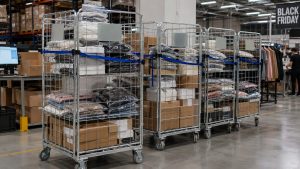
Different requirements arise when designing roll containers, order-picking trolleys, or specialized transport structures, where ergonomics, product accessibility, and operator workflow are of key importance. The same external dimension does not always mean the same solution. Functionality is determined primarily by the manner of use in a specific process.
2. Defining technical and functional requirements
After understanding the process, the next stage is defining the technical parameters of the solution. Designers and technologists analyze, among other factors:
Structure and manner of use, depending on the application, the solution may require:
- monolithic construction ensuring maximum durability,
- collapsible version allowing reduction of return transport costs,
- additional reinforcing elements,
- individual product protection,
- adaptation to specific transport equipment.
Work ergonomics. The design should take into account not only the product itself, but also the person who will use it.
Among other factors, the following are significant:
- working height of loading,
- ease of access to material,
- loading and unloading method,
- operator safety,
- reduction of unnecessary movements during work.
A well-designed logistic solution supports the process instead of forcing additional operations.
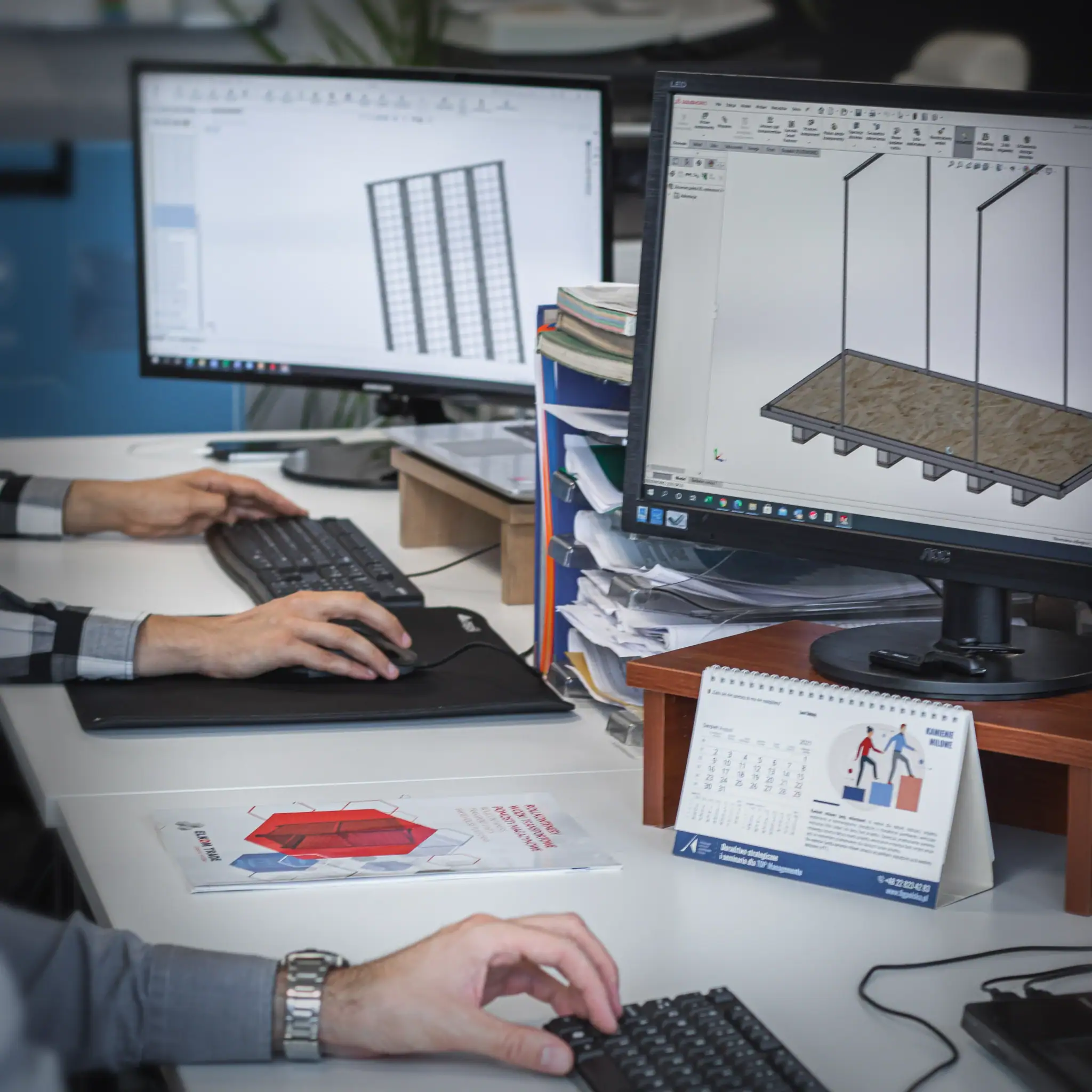
3. Design engineering and solution preparation
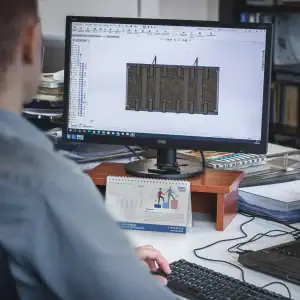
Based on the collected information, the designer develops a solution adapted to the product parameters, manner of use, and working conditions. Based on the collected data, a technical concept is created. At this stage, the following are determined:
- structure geometry,
- materials used,
- method of joining elements,
- strength parameters,
- possibility of stacking carriers or tiering them,
- transport and storage capabilities,
- compatibility with the client’s existing infrastructure.
At this stage, technical documentation is also created, and individual structural elements are selected to ensure appropriate functionality, durability, and safety of use.
An important element of the design is also the selection of appropriate surface protection. The type of protective coating is selected based on information regarding the environment in which the solution will be used—including working conditions, exposure to moisture, chemical substances, or intensity of operation. If the client has specific technical requirements or standards regarding surface protection, the coating can be applied in accordance with their specification.
As a result, both the structure and the method of its protection are taken into account at the design stage, and the final solution is prepared with actual operating conditions and long-term use in mind.

Contact our team, we will analyze your needs and propose a technical solution adapted to your working conditions.
4. Trial batch and solution testing
Even the best-designed solution is worth verifying in actual working conditions before commencing serial production. Depending on the nature of the project, a prototype or trial batch of the solution is prepared, which can be provided to the client for testing.
During testing, the solution is used in an actual production or warehouse process. This allows verification of, among other factors:
- method of handling the solution,
- adaptation to the production or warehouse process,
- cooperation with transport equipment,
- work ergonomics,
- safety of use,
- functionality of individual structural elements.
Testing also allows collection of user feedback and identification of potential problems that are not always possible to predict at the design stage.
Based on test results, the solution can be modified or refined before serial production begins. As a result, the final structure is better adapted to actual working conditions and user expectations.
This approach allows reduction of the risk of changes at a later stage and increases confidence that the solution will function correctly after implementation in daily operations.
5. Production and quality control
A logistic design must be translated into a solution that will operate in demanding industrial conditions. At this stage, the following are significant:
- quality of materials used,
- precision of execution,
- dimensional control,
- production repeatability.
In the case of reusable solutions, the possibility of subsequent regeneration, repair, and replacement of wear parts is also important. As a result, logistic equipment can function for many years while maintaining its operational value.
6. Designing with the entire solution lifecycle in mind
Modern logistics requires looking beyond the moment of purchase. During design, it is worth considering:
- structural durability,
- repairability,
- availability of spare parts,
- regeneration,
- Total Cost of Ownership (TCO)
- possibility of reuse.
This approach allows building solutions that not only meet current needs, but also support long-term process optimization.
Designing logistic solutions is a process combining needs analysis, production experience, and technical knowledge. Regardless of whether the solution is a logistic container, roll container, order-picking trolley, transport pallet, or specialized structure—the key is adapting it to the specific process.
The best logistic solutions are not created when we select a ready-made product. They are created when we precisely understand the problem and design a tool that helps solve it.


Author: Kamil Chamerski
Product Manager · Elkom Trade
Expert in product development and logistic solutions for production, industrial, and warehouse companies. Combines client conversations, process analysis, and design of functional solutions that help optimize logistics, improve work ergonomics, and increase operational efficiency.