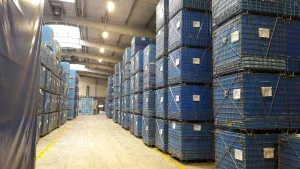
Warehouse safety is most often associated with the correct operation of forklifts, marking of communication routes, and adherence to OHS procedures. Meanwhile, the technical condition of the equipment employees use every day is an equally important element of safe internal logistics.
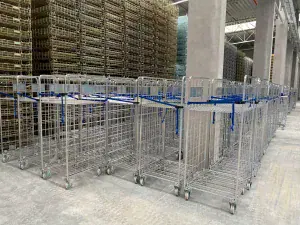
Mesh containers, roll containers, metal pallets, and other logistic carriers at our clients’ sites participate in almost every stage of material flow – from delivery acceptance, through storage, to internal transport and dispatch.
Do we control their technical condition as carefully as we do the equipment that moves them?
A bent container foot, a damaged stacking element, a faulty locking mechanism, or a protruding mesh fragment may seem like minor defects. However, under certain conditions, they can lead to loss of load stability, employee injury, or a dangerous situation during transport.
Therefore, internal logistics safety should encompass not only people, machines, and procedures, but also the proper selection, use, and maintenance of logistic carriers.
Together with Cezary, an OHS specialist at Elkom Trade, we examine the most significant risks and the principles that help prevent them.
1. Safety in internal logistics – why does the condition of carriers matter?
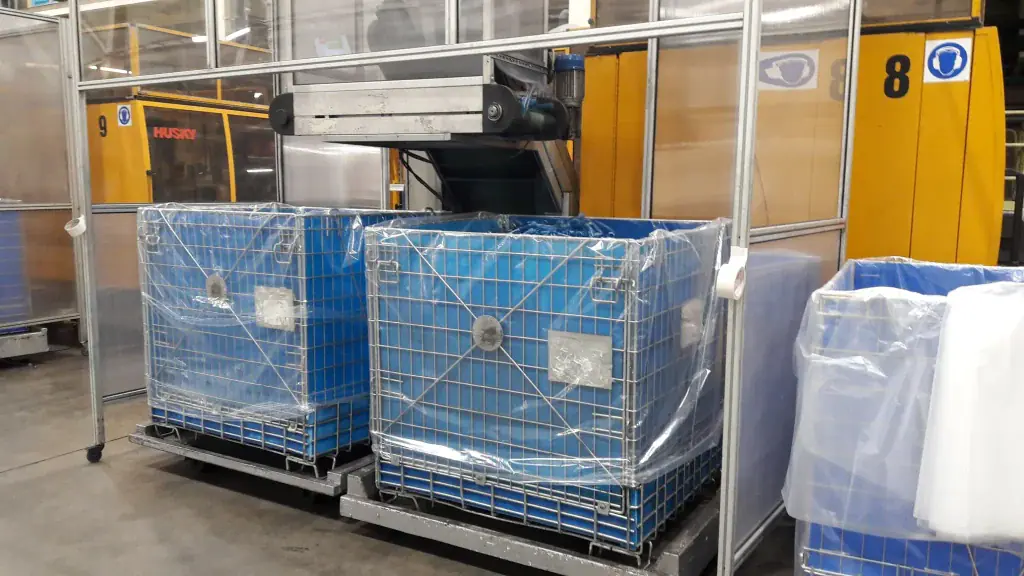
Internal logistics encompasses processes related to the transport, storage, and movement of materials within an enterprise. In practice, this means the daily handling of hundreds, and sometimes thousands, of transport carriers that are loaded, unloaded, moved by forklifts, and stacked. Each such operation requires functional equipment.
Even a correctly operated forklift does not eliminate risks associated with an unstable container. Similarly, a properly designed storage space will not ensure safety if the carriers used within it have damaged structural elements. The problem arises particularly when minor defects begin to be treated as a natural part of operation. The container can still be loaded, moved, and placed in the warehouse, so it remains in circulation. Meanwhile, its technical condition already requires verification.
A functional carrier is not only one that still fulfills its transport function, but above all, one that can be safely used as intended.
For this reason, the technical condition of warehouse equipment should be included in occupational risk assessments and work organization procedures.
2. What errors related to carrier use most frequently increase risk in the warehouse?
Dangerous situations do not always result from serious failures. They are often a consequence of daily habits, haste, or a lack of clear rules for handling damaged equipment.
Typical errors in the use of transport carriers include:
- continued use of containers with visible structural damage;
- ignoring deformations of feet and stacking elements;
- exceeding the permissible load capacity of carriers;
- stacking containers without checking the permissible configuration;
- moving loads without proper securing;
- temporary repairs without adequate technical assessment;
- lack of a system for marking and withdrawing non-functional carriers.
In many enterprises, attention is primarily focused on transport equipment. Meanwhile, even minor damage to a container can become significant when it holds several hundred kilograms of material.
From Cezary’s Perspective – Elkom Trade Expert
What are the most common errors related to carrier safety in internal logistics?
From an OHS perspective, one of the most serious errors is downplaying the first signs of equipment damage. If a container has a bent foot, a faulty lock, or a damaged structural element, we should not assume that since it has been used so far, it is still safe.
I would also draw attention to incorrect stacking and exceeding permissible loads. In such situations, the risk does not only concern the load itself, but primarily the employees in the vicinity.
It is important to build awareness that reporting a defect is not an impediment to the process, but an element of a responsible approach to workplace safety.
3. What damage to mesh containers can be particularly dangerous?
Metal containers are designed for repeated use, but during operation, their elements may wear out or become damaged. Not every deformation automatically means a loss of load-bearing capacity. However, there are damages that should not be ignored.
Deformed feet and base elements
The base is responsible for the stable positioning of the container and the correct transfer of loads. If the feet are bent or uneven, the container may rest improperly on the ground or on another container during stacking.
Deformations of load-bearing walls
The container walls, alongside the base, constitute one of the most important structural elements responsible for safe stacking. Particular attention should be paid to the load-bearing walls, on which the feet of the next container rest during stacking. Significant deformations of vertical wires, profiles, or other structural elements can lead to improper load transfer. Consequently, this can result in a loss of stack stability and an increased risk of containers shifting or tilting during use.
Cracked welds and structural damage
Cracked welds, deformed profiles, or compromised connections can affect structural strength. These are damages requiring technical assessment before the carrier is allowed back into operation.
Protruding wires and sharp edges
Damaged mesh elements can cause cuts, damage to work clothing, or destruction of transported material. The risk increases particularly in processes where employees manually handle the contents of containers.
Faulty closures and hinges
A malfunctioning locking mechanism can lead to uncontrolled opening of the container flap or wall.
Worn roll container wheels
Faulty wheels hinder control over the direction of carrier movement. They can also increase the physical effort of the employee during manual transport, affecting work ergonomics.
From Cezary’s Perspective – Elkom Trade Expert
Which container damages are most dangerous for employees?
I would pay particular attention to damage to elements responsible for structural stability and proper load transfer. I am referring primarily to container feet, stacking elements, load-bearing walls, and structural connections.
In the case of containers intended for stacking, the condition of the walls on which the feet of the next container rest during stacking is particularly important. Significant deformations of load-bearing elements can limit the structure’s ability to properly transfer loads and negatively affect stack stability.
Damage that directly threatens an employee during handling, such as sharp edges, protruding wires, or faulty closures, should also not be underestimated.
In risk assessment, the method of carrier use must always be considered. The consequences of damage to an empty container standing on the floor may differ from those of the same container placed in a multi-level stack and loaded with product. The risk further increases when structural damage occurs simultaneously with improper container handling.
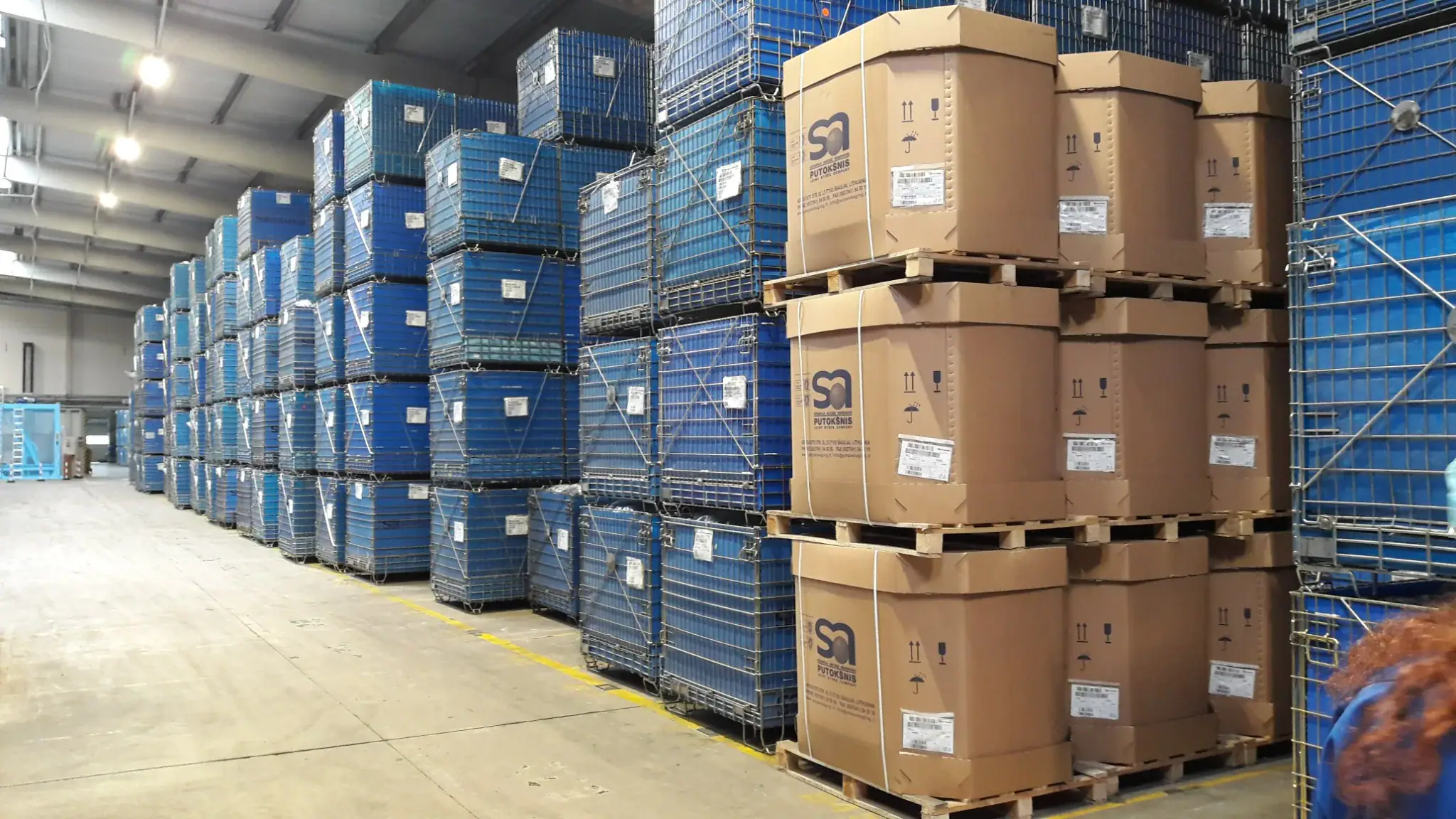
Damage to carriers can affect employee safety and the continuity of warehouse processes. We will help assess regeneration possibilities and select solutions adapted to operating conditions.
4. Safe container stacking – basic OHS principles
Stacking, i.e., placing containers one on top of another, allows for better utilization of warehouse space. At the same time, it requires maintaining proper storage parameters and the functionality of structural elements.
Before commencing stacking, the following should be considered:
- Permissible load capacity – the weight of the contents cannot exceed the parameters specified for a given carrier.
- Maximum number of stacking levels – depends on the container’s design, load weight, and usage conditions.
- Load distribution – improper product placement can negatively affect stability.
- Technical condition of feet and stacking elements – deformations can prevent proper seating of the next level.
- Condition of load-bearing walls – absence of deformations that could affect proper load transfer and stack stability during stacking.
- Substrate stability – the storage surface should have adequate load-bearing capacity and ensure stack stability.
- Carrier compatibility – similar container dimensions do not automatically mean they can be safely stacked together.
It is worth remembering that the maximum load capacity of a single container is not the same as the permissible load during stacking. For example, a specific model may have different permissible parameters for three versus four stacking levels. Therefore, one should always refer to technical documentation, manufacturer’s limitations, and the conditions of the specific warehouse process.
5. What to do if an employee notices a damaged container?
A key element of safety is not only identifying damage but also how to react. If the condition of a carrier raises doubts, the employee should not independently assume that the defect does not affect safety. The recommended action is:
Step 1. Discontinue use
If the damage may affect safety, the container should be taken out of use and the situation secured according to company procedures.
Step 2. Report irregularities
Damage should be reported to the supervisor or the designated person responsible for equipment condition.
Step 3. Mark and isolate the carrier
The container must be marked as unfit for use and placed in an appropriate zone to prevent accidental reuse.
Step 4. Technical assessment
A competent person should assess the possibility of further operation, repair, or the necessity of permanently withdrawing the carrier.
Step 5. Decision on further action
The carrier can only return to service if its technical condition allows for use as intended.
From Cezary’s Perspective – Elkom Trade Expert
What should an employee do if they notice a faulty container?
The most important thing is that the employee should not ignore the noticed damage and should not make an independent decision about continued use of the carrier if its safety raises doubts.
In such a situation, the container should be immediately withdrawn from current operation and the problem reported according to the applicable procedure. The next step should be a technical assessment.
From an OHS perspective, simple and understandable rules are very important. The employee should know whom to report a defect to, how to secure a damaged carrier, and who makes the decision about its re-admission to use.
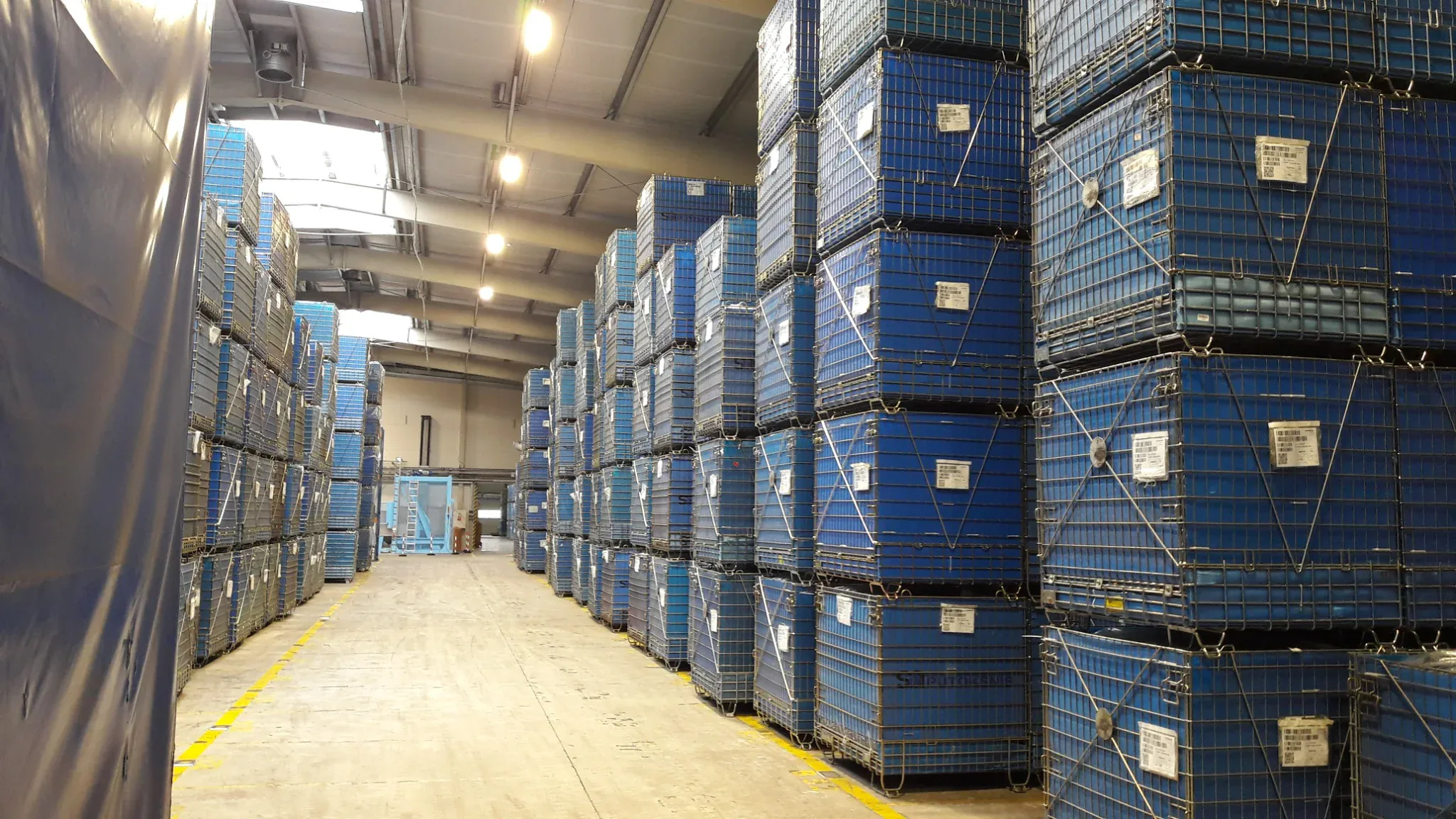
6. Why are regular carrier inspections more effective than reacting to failures?
One of the foundations of workplace safety is preventing hazards before they lead to a dangerous incident. This principle also applies to logistic carriers. In enterprises using a large number of containers, it is not enough to react only when damage prevents further work.
It is worth implementing two complementary levels of control.
Ongoing visual inspection
Before starting use, the employee pays attention to visible damage, structural instability, and the functionality of operational elements.
Periodic technical assessment
This includes a more detailed inspection of equipment in accordance with adopted procedures, manufacturer’s instructions, and risk assessment results.
Regular inspection of carriers can help detect recurring damage, identify its causes, and limit the risk resulting from continued use of non-functional equipment.
7. How does mesh container regeneration support workplace safety?
Metal containers are designed for many years of operation. With intensive use, some of their elements may wear out. However, not every defect means the entire carrier needs to be replaced. In many cases, it is possible to carry out regeneration, which includes repairing or replacing appropriate elements, restoring proper geometry, and checking the functionality of the structure.
From an OHS perspective, regeneration should not be treated solely as a way to reduce costs, but also as an element of responsible technical equipment maintenance. However, it is important to distinguish between repair and confirmation that the container is suitable for continued work. The mere fact of repair does not automatically mean that the carrier can be reloaded or stacked. The decision should result from appropriate technical control and confirmation of meeting the requirements related to its intended use.
Not all damage can be repaired in a way that ensures the required operational parameters. In certain cases, the correct decision will be to permanently withdraw the container from service.
At Elkom Trade, regeneration is one of the elements of managing the life cycle of metal logistic carriers – alongside design, production, servicing, and equipment replacement.
8. How to build a safety culture in the warehouse?
Functional equipment is an important element of safe logistics, but work organization is equally important. Even the best procedure will not fulfill its function if employees do not know how to react to damage or do not have the possibility to safely withdraw a non-functional carrier from circulation.
Therefore, it is worth focusing on three areas.
Employee awareness
Every person using carriers should know the basic signs of their malfunction and understand the potential consequences of ignoring defects.
Clear division of responsibility
The plant should define who reports damage, who is responsible for technical assessment, and who decides on the re-admission of the carrier to use.
Interdepartmental cooperation
Carrier safety is not solely an OHS issue. It requires cooperation between warehouse employees, production, maintenance, and those responsible for technical equipment.
An important element of this approach is also the analysis of the sources of damage. If a specific type of carrier requires frequent repairs, it is worth checking whether the cause is not its operating conditions, the method of moving loads, or the mismatch of the design to the process.
9. OHS Checklist – what to check before using a logistic container?
A brief visual inspection can help notice irregularities before starting transport operations.
Before using the carrier, it is worth answering the following questions:
- Does the container structure have no visible cracks or serious deformations?
- Are the feet and base elements undamaged?
- Are the load-bearing walls not excessively deformed and can they properly transfer loads during stacking?
- Have the stacking elements maintained their proper shape?
- Do the closures, hinges, and movable walls function correctly?
- Are there no sharp elements or rods protruding from the structure?
- Are the roll container wheels properly secured and functional?
- Does the load not exceed the permissible load capacity?
- Is the method of use consistent with the carrier’s intended purpose and documentation?
If the answer to any of the questions indicates a possible hazard, the procedure for reporting and assessing irregularities should be followed before further operation.
This list is for guidance only and does not replace manufacturer’s instructions or company OHS procedures.
Safe internal logistics starts with daily decisions
Safety in the warehouse does not depend on a single device, instruction, or procedure. It is the result of the interaction of people, infrastructure, work organization, and functional technical equipment.
Mesh containers, roll containers, and other logistic carriers can support efficient material flow for many years. However, this requires their proper selection, use as intended, and systematic inspection of their technical condition.
It is therefore worth regularly asking not only how many carriers are in the warehouse, but also how many of them actually meet the requirements for safe operation.
Early detection of damage, a responsible approach to repairs, and clearly defined procedures help create a work environment where safety is an integral part of daily processes.

Author: Cezary Żak
OHS AND ENVIRONMENTAL PROTECTION SPECIALIST, FIRE PROTECTION INSPECTOR
Expert in occupational health and safety, fire protection, and environmental protection. Combines technical knowledge with a practical approach to identifying hazards and minimizing risk in manufacturing companies. Focuses on creating safe working conditions, adhering to OHS standards, and implementing solutions that increase the safety and efficiency of production processes.