From August 12, 2026, companies operating in the European Union market will have to prepare for new requirements stemming from the PPWR regulation, namely the Packaging and Packaging Waste Regulation. This is not just another minor formal change. PPWR transforms the way packaging is approached: from design, through reuse, recycling, documentation, to the entire product life cycle.
For many companies, this means re-evaluating transport packaging, logistic units, and carriers used in the circulation between production, warehouse, transport, and the recipient.
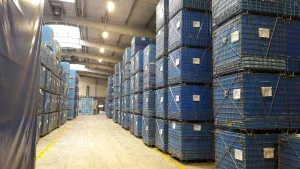
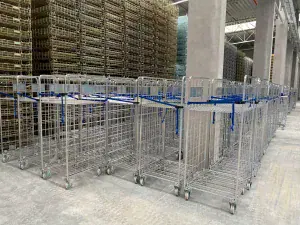
In this context, metal mesh containers, roll containers, pallet collars, metal pallets, and other reusable carriers are no longer just warehouse equipment. They are becoming an integral part of compliance, sustainability, and waste reduction strategies.
What is PPWR and why is it important for logistics?
PPWR, the European Parliament and Council Regulation (EU) 2025/40 on packaging and packaging waste, entered into force on February 11, 2025, and will generally apply from August 12, 2026. The regulation covers the entire life cycle of packaging and aims to reduce packaging waste and support the circular economy.
For manufacturing, logistics, and commercial companies, it is important that PPWR applies not only to consumer packaging. Transport packaging, which is used for moving, protecting, and organizing products in the supply chain, will also be significant.
This means that companies will have to pay increasing attention to what their packaging is made of, whether it is recyclable, whether it can be reused multiple times, and whether its compliance with requirements can be documented.
PPWR shifts the focus from “single-use packaging” to “circular packaging”
One of the key directions of PPWR is to reduce waste and increase the importance of reusable packaging. From January 1, 2030, specific types of transport and sales packaging used for transporting products within the EU must meet reuse targets. The European Commission indicates, among others, a target of at least 40% for selected categories of transport packaging, such as pallets, crates, trays, plastic containers, IBCs, buckets, drums, and jerrycans.
This is a very important signal for the market. The direction is clear: less single-use, more durable circular systems.
In practice, companies will have to ask themselves:
Are our packaging and logistic carriers designed for single use, or for many years of circulation?
And this is where solutions such as mesh containers, roll containers, metal pallets, and pallet collars come into play.
Do you want to reduce single-use packaging and prepare your logistics for the PPWR direction?
Let’s talk about reusable metal carriers: mesh containers, roll containers, pallet collars, metal pallets, and special solutions tailored to your process.

Why do metal logistic carriers fit well with the PPWR direction?
Metal logistic carriers have several features that naturally respond to the direction of regulatory changes.
Firstly, they are reusable. They can operate in a circular system for years, instead of generating waste after one or a few cycles.
Secondly, they are durable and repairable. Replacing wheels, repairing structural elements, refurbishing containers, or renewing a fleet allows for extending the carrier’s life cycle.
Thirdly, they are easier to identify and control in the process. They can be marked, assigned to a circulation, registered, and monitored as a specific logistic unit.
Fourthly, metal as a material is well-recognized in recycling processes. PPWR will strengthen requirements for packaging design for recycling and the assessment of its compliance with environmental requirements. According to European Commission materials, all packaging must be designed to be recyclable by 2030, and from 2035, requirements will also be linked to effective large-scale recycling.
PPWR and documentation: compliance will need to be demonstrated
PPWR involves not only environmental requirements but also documentation. Manufacturers will have to demonstrate packaging compliance with relevant requirements, prepare technical documentation, and a declaration of conformity. According to the regulation text, before placing packaging on the market, the manufacturer should conduct a conformity assessment, prepare technical documentation and a declaration of conformity, and the packaging should have a type, batch, serial number, or other element enabling identification.
For companies, this means that packaging will no longer be just “something we transport things in.” It will be an element that needs to be described, documented, and controlled.
In this context, reusable metal carriers can be easier to manage than a large number of single-use or non-standard packaging. A single durable container, roll container, or pallet collar can have its own marking, usage history, service cycle, and a clear place in the process.
Do you want to reduce single-use packaging and prepare your logistics for the PPWR direction?
Let’s talk about reusable metal carriers: mesh containers, roll containers, pallet collars, metal pallets, and special solutions tailored to your process.

How do metal logistic carriers respond to the PPWR direction?
PPWR / Market Direction | What does it mean for companies? | How do Elkom Trade solutions fit in? |
Reusable Packaging | Companies will have to reduce single-use items and increase the share of packaging operating in a circular system | Mesh containers, roll containers, pallet collars, and metal pallets are designed for multiple uses |
Design for Recycling | Packaging should be easier to process at the end of its life cycle | Metal structures are materially identifiable and can be more easily directed to appropriate recycling streams |
Repairability and Refurbishment | Companies will seek ways to extend the life of packaging and carriers | Elkom Trade offers service, refurbishment, and spare parts, allowing the fleet to operate longer |
Documentation and Identification | Packaging compliance will need to be demonstrated | Carriers can be marked, registered, and assigned to a specific circulation or process |
Less Waste in the Supply Chain | Single-use packaging will become an increasing environmental and organizational burden | Reusable carriers reduce the need to constantly generate new transport packaging |
Stable Logistic Flow | Packaging must not only protect the product but also support its flow | A metal carrier can function as a standard in production, warehousing, transport, and reverse logistics |
It’s not just about recycling. It’s about the entire life cycle of the carrier
Many companies think about sustainability primarily through the lens of recycling. This is an important element, but in logistics, it’s worth looking broader.
The most responsible transport packaging is often one that doesn’t need constant replacement. If a container, roll container, or pallet collar can operate through many cycles, be repaired, refurbished, and reused, a company reduces both waste and procurement pressure.
This is practical circular economy:
- longer carrier lifespan,
- fewer single-use packages,
- less waste,
- greater control over circulation,
- serviceability,
- refurbishment capability,
- better utilization of existing fleet.
For the logistics department, this is not just an environmental issue. It is also about operational continuity, carrier availability, warehouse order, and predictable costs.
Refurbishment as a response to PPWR and ESG
In the context of PPWR, refurbishment becomes particularly important. If a company already has a fleet of containers, roll containers, or pallet collars, it doesn’t always have to automatically buy new ones.
Sometimes, a more rational step is a technical assessment, repair, replacement of worn-out elements, and reintroduction of the carrier into circulation.
This approach effectively combines several perspectives:
- Logistics: carriers return to operation.
- Procurement: the company reduces unnecessary expenses.
- ESG: the product life cycle is extended.
- HSE: damaged elements are not accidentally left in circulation.
- Compliance: it’s easier to demonstrate that the company consciously manages packaging and carriers.
This is precisely why service and spare parts are not an add-on to sales. In the new regulatory landscape, they can become a crucial element of the entire packaging strategy.
What about declarations of conformity and labeling?
PPWR places a stronger emphasis on documenting packaging compliance with requirements. This includes technical documentation, declarations of conformity, and packaging traceability. For reusable packaging, documents will need to be stored longer than for single-use packaging – according to the cited regulation text: 5 years for single-use packaging and 10 years for reusable packaging.
For manufacturers and users of transport packaging, this means greater importance of data organization:
- what type of carrier is in circulation,
- what materials it is made of,
- what its purpose is,
- whether it is reusable,
- whether it can be repaired,
- how it is marked,
- whether it has documentation confirming compliance.
This is another argument for standardizing the fleet of logistic carriers.
PPWR and heavy metals – what to remember?
The PPWR also maintains restrictions on specific substances present in packaging. A limit of 100 mg/kg is specified for the sum of concentrations of lead, cadmium, mercury, and hexavalent chromium.
For companies using transport packaging, this means that not only the design and function of the carrier will be important, but also the materials used, coatings, additives, plastic components, paints, markings, and auxiliary components.
In practice, the question will become increasingly important:
Do we know what our transport packaging is made of and can we document it?
Do you want to reduce single-use packaging and prepare your logistics for the PPWR direction?
Let’s talk about reusable metal carriers: mesh containers, roll containers, pallet collars, metal pallets, and special solutions tailored to your process.
Why should you think about this now?
PPWR will apply from August 12, 2026, but some requirements and targets will be implemented in stages in subsequent years. This means that companies should not wait until the last moment. It is better to check now which packaging and carriers in the company are single-use, which are reusable, which can be repaired, and which generate the most waste.
It is worth analyzing:
- what transport packaging is used in the company,
- which of them are single-use,
- which can be replaced by reusable carriers,
- does the company have a standard for marking carriers,
- can the container fleet be refurbished,
- is there a service plan,
- is the technical documentation organized,
- do current solutions support ESG goals.
This does not necessarily mean an immediate replacement of the entire fleet. Often, the first step can be standardization, refurbishment, or the introduction of reusable solutions in one selected area of the process.
How can Elkom Trade support companies in this direction?
Elkom Trade designs and manufactures metal logistic carriers that can operate in a reusable cycle: mesh containers, roll containers, pallet collars, metal pallets, platforms, and special solutions.
Our approach does not end with product delivery. It is crucial to match the carrier to the process, ensure its usability for years, and provide support in fleet maintenance.
Depending on your needs, we can assist in areas such as:
- selection of reusable containers and carriers,
- fleet standardization,
- special solutions for specific processes,
- refurbishment of existing containers,
- service and spare parts,
- reducing single-use packaging in logistics,
- preparing a more organized carrier circulation.
In practice, the goal is for transport packaging not to be a one-time cost, but part of a stable and more responsible logistic process.
PPWR will change the way packaging is perceived. Durable, reusable, repairable, identifiable, and easier-to-document packaging will become increasingly important.
For logistics, this means that containers, roll containers, pallet collars, and metal pallets can become not only operational equipment but also an element of environmental and regulatory strategy.
Companies that are already organizing their carrier circulation, reducing single-use items, and investing in reusable solutions will be better prepared for the subsequent stages of PPWR implementation.
Submit Form
FAQ
Does PPWR apply to transport packaging?
Yes. PPWR covers packaging and packaging waste, and in the context of reuse targets, specific formats of transport packaging are also indicated, including pallets, crates, trays, containers, and IBCs.
When will PPWR come into force?
The regulation entered into force on February 11, 2025, and will generally apply from August 12, 2026.
Will all packaging have to be reusable?
Not in every case and not immediately. PPWR provides for different obligations, schedules, exceptions, and targets for various types of packaging. However, the direction of the regulation is clear: more reuse, less waste, and greater responsibility for the entire packaging life cycle.
Can metal containers help prepare for PPWR?
Yes, if they are used as reusable transport packaging or carriers in a circular system. Their advantages include durability, repairability, refurbishment, marking, and reuse over many cycles.
Does container refurbishment align with sustainable development?
Yes. Refurbishment extends the carrier’s life cycle and reduces the need to purchase new units. This is a practical element of the circular economy.