In modern logistics, not only the selection of the appropriate carrier but also the management of its life cycle is becoming increasingly important. A mesh container, which operates for years in production, warehousing, or transport circulation, does not always have to be replaced with a new one at the first signs of wear.
In many cases, regeneration is a more justified solution, meaning restoring the carrier’s functionality, safety of use, and ability to continue working.
This approach aligns well with the needs of companies that want to better utilize their existing resources, reduce operational costs, and extend the life cycle of logistics equipment. Regeneration allows a container to be treated not as a one-time cost, but as an element of a carrier fleet that can be serviced, controlled, and kept in circulation for a longer period.
Why do mesh containers require regeneration?
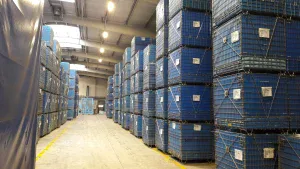
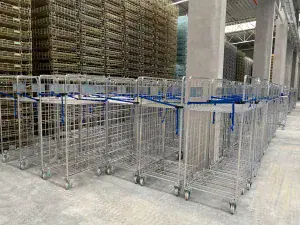
Mesh containers are designed for intensive use. They operate in warehouses, production plants, logistics centers, and in reverse logistics. They are moved by forklifts, stacked, loaded, unloaded, and repeatedly used in daily operational processes.
Over time, typical signs of wear may appear, such as:
- mesh deformations,
- bent walls,
- damaged feet or base elements,
- compromised welds or joints,
- worn functional elements,
- problems with stable stacking,
- deterioration of operational safety.
However, not every such defect means the necessity of purchasing a new container. In many cases, the structure can still be restored to working condition. This is where regeneration comes in.

What is regeneration of mesh containers?
Regeneration is a technical process aimed at restoring a container’s operational parameters. It’s not just about improving the carrier’s appearance, but primarily about its functionality, stability, and safety for further use.
In practice, regeneration may include, among other things:
- assessment of the container’s technical condition,
- straightening deformed elements,
- mesh repair,
- repair or replacement of damaged components,
- replenishment of missing elements,
- restoration of functional elements,
- surface protection,
- quality control after completion of work.
Thanks to this, a container that previously caused problems in daily work can be returned to further use.
Do you have worn mesh containers? Check if they can be given a second life.
You don't have to replace them with new ones immediately. Send us photos, and we will check if the containers qualify for regeneration and what scope of work will be needed.
Regeneration as an element of carrier fleet management
Regeneration is a particularly important solution for companies that have a large number of containers and use them in repetitive processes. In such a model, even individual decisions regarding the repair, replacement, or continued use of carriers impact operational costs.
For companies with a larger container fleet, regeneration can be a way to reduce the costs of purchasing new carriers, decrease the number of units taken out of circulation, and better plan fleet operations in the long term.
The main benefits of regeneration are:
- extending the life cycle of containers,
- cost reduction compared to purchasing new carriers,
- reduction of metal waste,
- better utilization of existing resources,
- improved work safety,
- maintaining continuity of logistics processes,
- possibility to organize the carrier fleet,
- support for sustainable development activities.
In practice, regeneration allows a company to recover value from the carriers it already owns. Instead of treating a worn container as waste or a replacement cost, it can be checked whether it can still work in the process.

Practical example
Regeneration of containers for Petainer, a PET packaging manufacturer
Regeneration of mesh containers is applied in companies that intensively use logistic carriers in daily production, warehousing, and transport processes. One example of this approach is the cooperation between Elkom Trade and Petainer, a manufacturer of PET packaging for the beverage and industrial sectors.
In this case, regeneration allowed containers to be returned to further use, reduced the need to purchase new carriers, and better utilized the existing fleet. This shows that durability in logistics does not end with choosing a robust container. Equally important is how a company manages it after several years of intensive work.
“I wholeheartedly recommend Elkom Trade’s mesh container regeneration services. The regeneration process was completed on schedule, and the refurbished containers are characterized by excellent durability, which allows us to achieve measurable financial savings. Elkom Trade is a reliable business partner whose high-quality services perfectly align with our corporate sustainability strategy and our commitment to extending product life cycles,” emphasizes Mathias Lundin, Purchaser at Petainer Lidköping AB.
How does the regeneration process work at Elkom Trade?
Regeneration of mesh containers at Elkom Trade is carried out in stages. This provides the client with clear information on what can be repaired, what the scope of work will be, and whether regeneration is economically justified.Preliminary container assessment
The first step is to gather basic information: carrier type, number of containers, type of damage, and photos. At this stage, it is already possible to preliminarily determine whether the containers qualify for regeneration. This is important for the client because it allows them to quickly assess whether it is worthwhile to start the process and what solution might be most rational.Technical assessment upon delivery to Elkom Trade
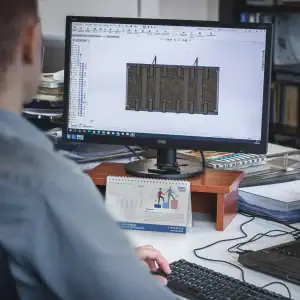
After the containers are delivered, a more thorough analysis of their technical condition is performed. Structural elements, the base, walls, mesh, stacking points, and elements affecting safety of use are checked. At this stage, the scope of necessary work can be precisely determined.Repair and component replacement
Depending on the condition of the containers, necessary repairs are carried out. These may include straightening, replenishing missing parts, repairing damaged elements, or replacing selected components. The goal is to restore the container’s utility value, not just to perform a cosmetic improvement.Protection and preparation for further work
Depending on the agreed scope of regeneration, it is also possible to renew or supplement surface protection. This is particularly important when containers operate in demanding conditions or are to continue functioning in intensive circulation.Quality control and container marking
After the work is completed, the containers are inspected for functionality, stability, and safety of use. The client receives information about the actions performed. Each regenerated container can be additionally marked with a colored sticker. Such marking allows easy identification of how many times a given container has already been regenerated. This gives the company greater control over the condition of its carrier fleet and allows for better planning of subsequent inspections, repairs, or decisions regarding further use.
When should you consider container regeneration?
Regeneration should be considered when containers:- are intensively used,
- have visible damage,
- lose stability or functionality,
- still have a repairable structure,
- are part of a larger carrier fleet,
- their replacement with new ones would generate high costs,
- the company wants to reduce waste and better utilize existing resources.
Finally: can this container still be saved? A short conversation with Kamil Chamerski
Container regeneration sounds technical, but in practice, it starts with a simple question: can this container still be safely returned to work? We discuss what such an assessment looks like from the inside with Kamil Chamerski, Product Manager at Elkom Trade.Kamil, when is a container truly suitable for regeneration?
When its structure still allows for safe use after repair. We don’t just look at appearance. We primarily check elements that affect stability, stacking, and operational safety.Can every damaged container be saved?
Not every one. It’s worth stating directly. Sometimes repair no longer makes technical or economic sense. Regeneration is not about repairing everything at all costs, but about returning to circulation those containers that can continue to work safely.When should a client think about regeneration?
Preferably sooner rather than later. If problems with stacking, visible deformations, damage to the base or mesh appear, it’s worth performing an assessment. Quick reaction often helps avoid greater costs later.What does the client gain from regeneration?
First and foremost, it extends the life cycle of the containers they already own. It’s not always necessary to buy new carriers if part of the current fleet can be repaired and safely reused. This is real savings and better control over equipment operating in the warehouse, production, or transport.What’s the best way to start?
With photos and a brief description of the problem. Just show how many containers there are, what type they are, and what damage is visible. Based on this, a preliminary assessment can be made to determine if regeneration makes sense.

Author: Kamil Chamerski
Product Manager · Elkom Trade
An expert in the development of products and logistics solutions for manufacturing, industrial, and warehousing companies. He combines client discussions, process analysis, and the design of functional solutions that help optimize logistics, improve work ergonomics, and increase operational efficiency.