On February 11, 2025, the PPWR regulation, i.e., the Packaging and Packaging Waste Regulation, came into force. The main provisions will begin to be applied from August 12, 2026. The regulation covers packaging regardless of material and origin and introduces new requirements related to, among other things, reuse, recyclability, traceability, technical documentation, and confirming packaging compliance with regulatory requirements.
The problem is that these systems operate according to completely different logics of lifecycle, reuse, and regulatory compliance.
One word “packaging.” Several different worlds: packaging, logistics carriers, and flow infrastructure
In practice, the concept of “packaging” is beginning to encompass very different operating models for products, materials, and logistics flows.
Consumer packaging is most often designed around a short lifecycle. Its primary function remains product protection during sales and distribution. After use, the packaging becomes waste or enters the recycling process.
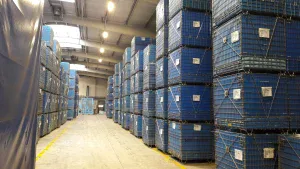
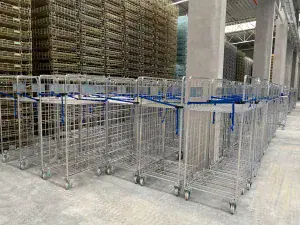
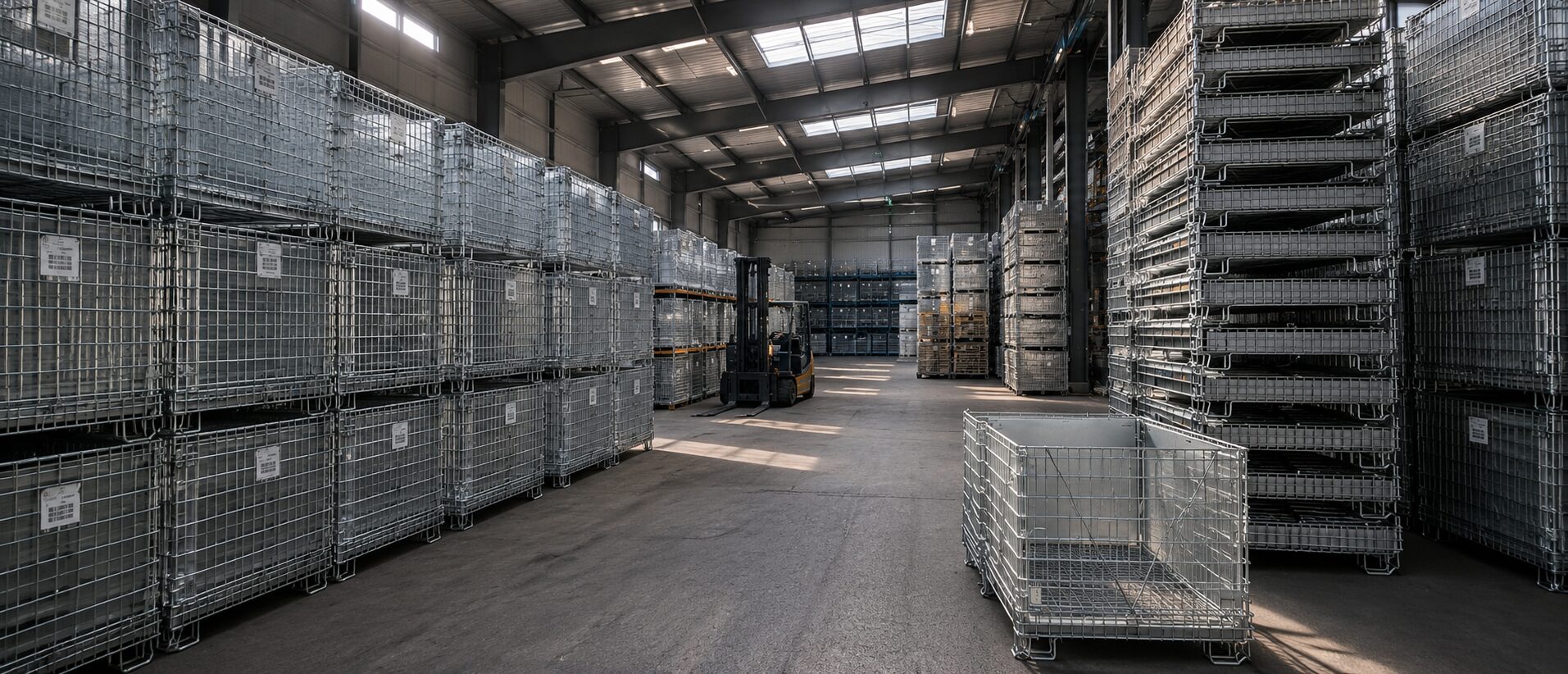
Industrial RTP, i.e., reusable packaging and carriers, function differently. Such solutions, for example, mesh containers, roll containers, pallet collars, metal pallets, or other metal transport containers, can operate for many years, return to circulation, undergo technical inspection, repair, refurbishment, and reuse.
Recycling systems also operate according to their own logic. Their goal is not to keep a specific packaging unit in operational circulation, but to recover material at the end of its lifecycle.
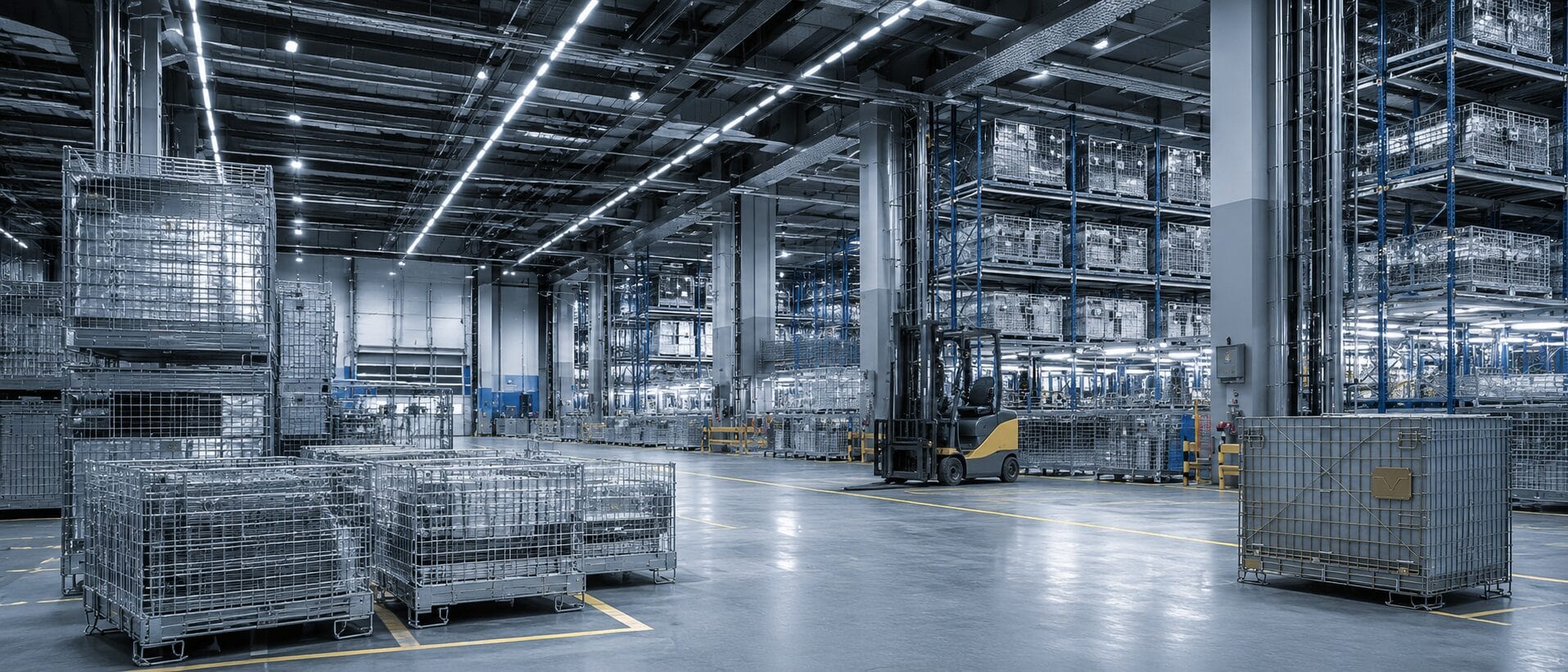
Logistics infrastructure operates differently still, with its main task being to ensure the continuity and integration of flows within the supply chain: from production, through warehousing, internal transport, and distribution, to the reverse flow of carriers.
As a result, systems with completely different definitions of efficiency, durability, and operational responsibility are beginning to function under one regulatory concept.
Different systems operate according to distinct logics of lifecycle, ownership, reuse, service, and compliance, even though they are increasingly entering the same regulatory discussion about PPWR.
Different systems. Different logics. Different risks.
In discussions about PPWR, these areas are often lumped together, even though they operate under different principles.
CONSUMER PACKAGING | INDUSTRIAL RTP | RECYCLING SYSTEMS | LOGISTICS INFRASTRUCTURE | |
|---|---|---|---|---|
System type | Packaging intended for product sale and presentation | Reusable transport carriers used in industrial circulation | Material collection, sorting, and recovery systems | Solutions supporting goods flow in the supply chain |
Main objective | Product protection and sales support | Safe and efficient internal and inter-plant transport | Raw material recovery after end of use | Process integration and operational optimization |
Lifecycle | Short, usually single-use | Long, based on multiple uses | Final stage of material or packaging life | Long, systemic, and continuous |
Operating logic | Use and withdrawal from circulation | Return, inspection, repair, and reuse | Stream selection and material processing | Network, flow, and carrier availability management |
Key focus | Cost, weight, convenience, and market compliance | Durability, traceability, number of cycles, and availability | Collection efficiency and recyclate quality | Reliability, throughput, and data integration |
Typical owner | Brand, manufacturer, or retail chain | Manufacturer, logistics operator, or pooling provider | Waste operator, recycler, or recovery organization | Logistics operator, integrator, or system owner |
Compliance challenges | Material composition, recyclability, and labeling | Circulation tracking, reverse logistics, and asset data | Sorting quality, contamination, and processing standards | System boundaries, documentation, and operational data integration |
RTP increasingly functions as an element of operational infrastructure
In many industrial applications of RTP systems, i.e., reusable transport packaging, mesh containers, roll containers, and other reusable carriers cease to function solely as transport packaging.
They are increasingly becoming an element of the operational infrastructure responsible for the continuity of material flow between production, warehouse, internal transport, distribution, and reverse logistics.
This changes how such systems are evaluated.
Not only material parameters become crucial, but also:
- availability of containers and transport carriers,
- reverse flows in the supply chain,
- container control and inspection process,
- replacement cycles and carrier refurbishment,
- traceability and visibility of assets in circulation,
- operational continuity of logistics processes.
In practice, this means that problems related to RTP are increasingly being addressed not only by departments responsible for packaging regulatory compliance but also by purchasing, logistics, operations, and supplier management departments.
This is a significant change, as the classic “use and discard” logic no longer describes the operation of many industrial returnable packaging systems and reusable carriers.
The problem is becoming operational, not solely regulatory
With the development of PPWR, questions are increasingly arising regarding:
- traceability of materials, packaging, and carriers in the supply chain,
- supplier declarations and statements,
- material composition of packaging and components,
- returnable systems for reusable packaging and carriers,
- lifecycle of packaging or transport carriers,
- technical and compliance documentation,
- owner’s responsibility for packaging, containers, or carriers in circulation.
And this is where the problem of an oversimplified approach becomes apparent. When systems operating under different lifecycle logics are grouped into a single “packaging” category, companies may start applying inappropriate evaluation criteria.
In practice, this can lead to erroneous decisions regarding durability, replacement cycles, return infrastructure, service, refurbishment, and the management of the flow of containers, roll containers, and other units in circulation.
The problem is not the regulation itself. The problem is treating different operating systems as if they operated under the same principles.

What does this mean for companies using metal logistics carriers?
For manufacturing, warehousing, and logistics companies, PPWR may necessitate a closer look at how transport packaging and reusable carriers operate in real circulation.
Mesh containers, roll containers, pallet collars, or metal pallets are not merely “packaging” in the classic sense. In many organizations, they are part of the flow infrastructure: they return to circulation, are repaired, refurbished, marked, inspected, and used for years.
Therefore, when evaluating such solutions, it is worth considering not only the material but also carrier availability, service, spare parts, documentation, refurbishment possibilities, and the full product lifecycle.
Perhaps the greatest challenge in the coming years will not be “packaging” itself, but the ability to distinguish between systems that truly operate according to the same operational logic and those that have merely been placed in a single regulatory category. This applies to consumer packaging, transport packaging, industrial RTP systems, and reusable metal logistics carriers alike.
PPWR will likely become a moment when the differences between consumer packaging, industrial RTP, recycling systems, transport packaging, and logistics infrastructure begin to be analyzed in much greater detail than before.
And rightly so. Lumping everything into one “circular packaging” category is convenient only until someone actually has to manage the circulation of carriers, their availability, repair, refurbishment, documentation, and responsibility for the entire lifecycle.

Author: Mariusz Wituszyński
Business Development Director · Elkom Trade
Expert in intralogistics, returnable packaging, and load carriers for manufacturing and industrial companies. Helps companies organize carrier circulation, streamline warehouse processes, and select solutions that combine durability, ergonomics, and real cost optimization.