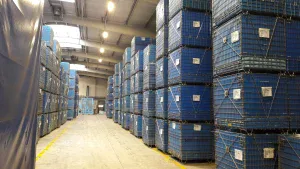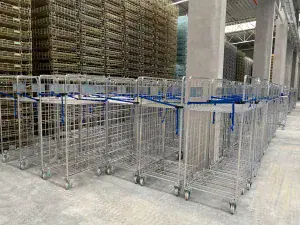
In industrial and warehouse logistics, carriers are in daily use. Mesh containers, roll containers, pallet collars, metal pallets, and transport platforms are constantly loaded, moved, stacked, transported, stored, and reintroduced into circulation.
Over time, damage occurs: bent walls, worn wheels, deformed stacking elements, damaged feet, soiled labels, structural play, or problems with latches. In many companies, the first instinct is to purchase new carriers. However, this is not always the best decision.
In many cases, the fleet does not need to be replaced. It can be repaired, refurbished, standardized, and returned to service.
Refurbishment, maintenance, and access to spare parts allow carriers to remain operational, reduce downtime, minimize waste, and better utilize the operating budget. This solution is particularly important for companies that want to conduct logistics in a more responsible, predictable way, in line with the principles of the circular economy.
Key Takeaways
- A damaged container, roll container, or pallet collar does not always mean a new carrier must be purchased.
- Refurbishment helps restore fleet functionality and reduce the number of units withdrawn from circulation.
- Maintenance and spare parts allow for earlier intervention, before a minor fault becomes an operational problem.
- Well-maintained carriers support workplace safety, warehouse order, and the continuity of logistics processes.
- Extending the life cycle of metal logistics carriers aligns with the principles of sustainable development and the circular economy.
- Elkom Trade refurbishes various types of logistics carriers, including mesh containers, gitterboxes, roll containers, metal pallets, pallet collars, and other structures used in intralogistics, provided their technical condition allows for the restoration of their operational parameters.
Keep Your Fleet of Carriers Operational
We refurbish, repair, and help restore containers, roll containers, pallet collars, and other metal logistics carriers to service.
Why is Maintaining Your Fleet of Carriers So Important?
In many companies, logistics carriers are treated as auxiliary equipment. As long as they work, no one pays much attention to them. The problem begins when they start generating exceptions.
A damaged container does not enter circulation. A roll container with a faulty wheel is set aside. A pallet collar with a deformed element cannot be used safely. A metal pallet requires additional inspection before loading. Each such case seems minor, but on the scale of an entire warehouse, it can lead to chaos.
The most common consequences of a neglected fleet are:
- lack of available carriers at critical moments,
- additional repacking,
- downtime during picking, loading, or unloading,
- increased risk of product damage,
- stacking problems,
- disorder in the yard or warehouse,
- unnecessary purchases of new units,
- decreased workplace safety.
Therefore, maintenance and refurbishment should not be treated as a “post-failure rescue.” It is better to view them as part of normal fleet management.
Refurbishment, Maintenance, and Spare Parts – What’s the Difference?
These terms are often used interchangeably, but in practice, they refer to different levels of work with a carrier.
Maintenance
Maintenance is the ongoing upkeep of carriers to ensure their operational efficiency. It most often concerns elements that wear out in daily use: wheels, fasteners, latches, hinges, moving parts, shelves, handles, or identification plates.
Maintenance aims to prevent major failures. Its goal is to react quickly to minor problems before they affect the continuity of warehouse operations.
Spare Parts
Spare parts allow for the replacement of a worn or damaged element without withdrawing the entire carrier. For roll containers, these will often be wheels, shelves, latches, side elements, or stabilizing components. For mesh containers and pallet collars, these may be structural fragments, feet, catches, stacking details, or plates.
The availability of spare parts is crucial for companies that use their fleet for many years. Without spare parts, even a minor fault can lead to the unnecessary decommissioning of an entire carrier.
Refurbishment
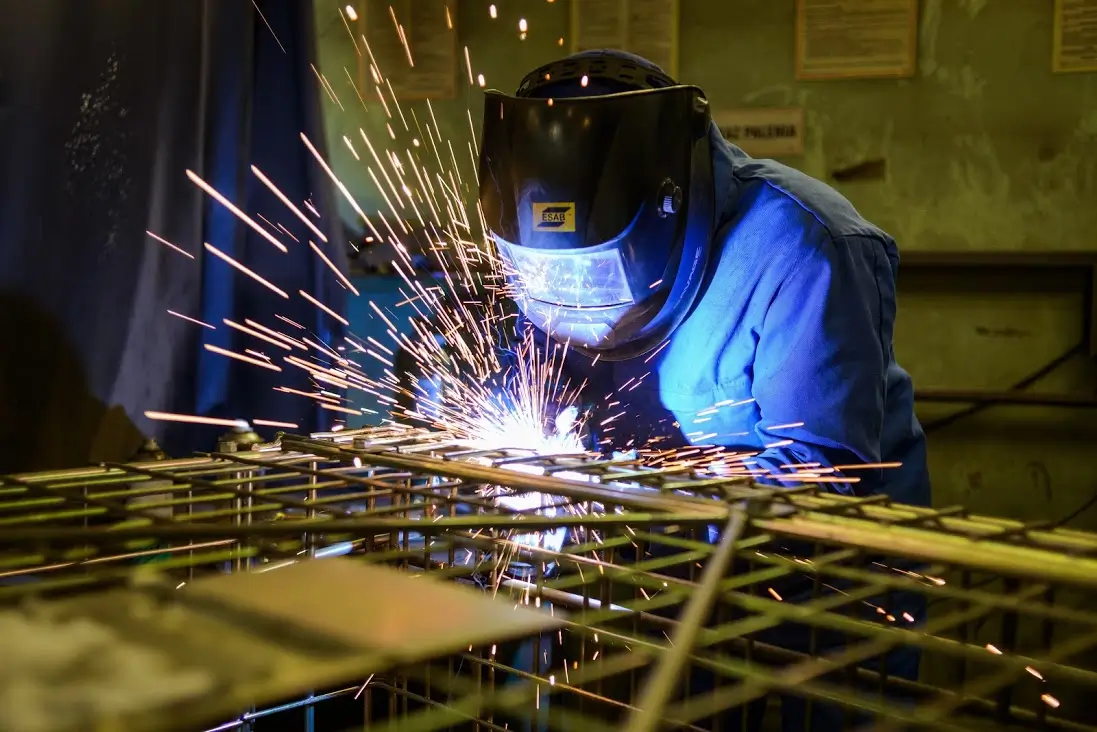
Refurbishment is a broader process. It includes technical condition assessment, damage qualification, repair, replacement of selected elements, restoration of functionality, and quality control. Our refurbishment process begins with an initial assessment, proceeds through technical evaluation and repair qualification, and concludes with execution, quality control, and documentation of the work performed.
Refurbishment makes sense when the carrier still has the potential for further use, and repair can restore its functional utility and safety.
Keep Your Fleet of Carriers Operational
We refurbish, repair, and help restore containers, roll containers, pallet collars, and other metal logistics carriers to service.
Why Are Damaged Carriers a Problem for the Entire Logistics Chain?
A damaged logistics solution is rarely a problem only for the warehouse. If a container does not maintain its geometry, a roll container handles poorly, or a pallet collar is unstable on a pallet, the consequences can appear in several parts of the process.
Workplace Safety
Carriers are moved, lifted, stacked, and handled by people. If the structure is unstable, has sharp edges, damaged wheels, or faulty latches, the risk to employees increases.
A refurbished logistics solution should be stable, maintain geometry for stacking, and not pose a risk to employees.
Operational Continuity
If part of the fleet is sidelined due to damage, the availability of carriers decreases. The process then starts to operate with workarounds: employees search for free containers, use substitutes, repack goods, or delay loading.
This is a typical example of a problem that starts with one carrier but quickly affects the entire workflow.
Quality and Product Protection
A container, roll container, or pallet collar is meant to protect the cargo. If they are deformed, unstable, or close improperly, the risk of product damage increases. In industries that handle large volumes, even a small increase in damage can be operationally noticeable.
Warehouse Order
Damaged carriers are often put aside “for a moment” in a side area. Over time, an area of unused fleet forms, which occupies space, blocks communication routes, and hinders work organization.
Regular refurbishment helps organize this area: some carriers return to service, some are qualified for repair, and some can be consciously withdrawn.
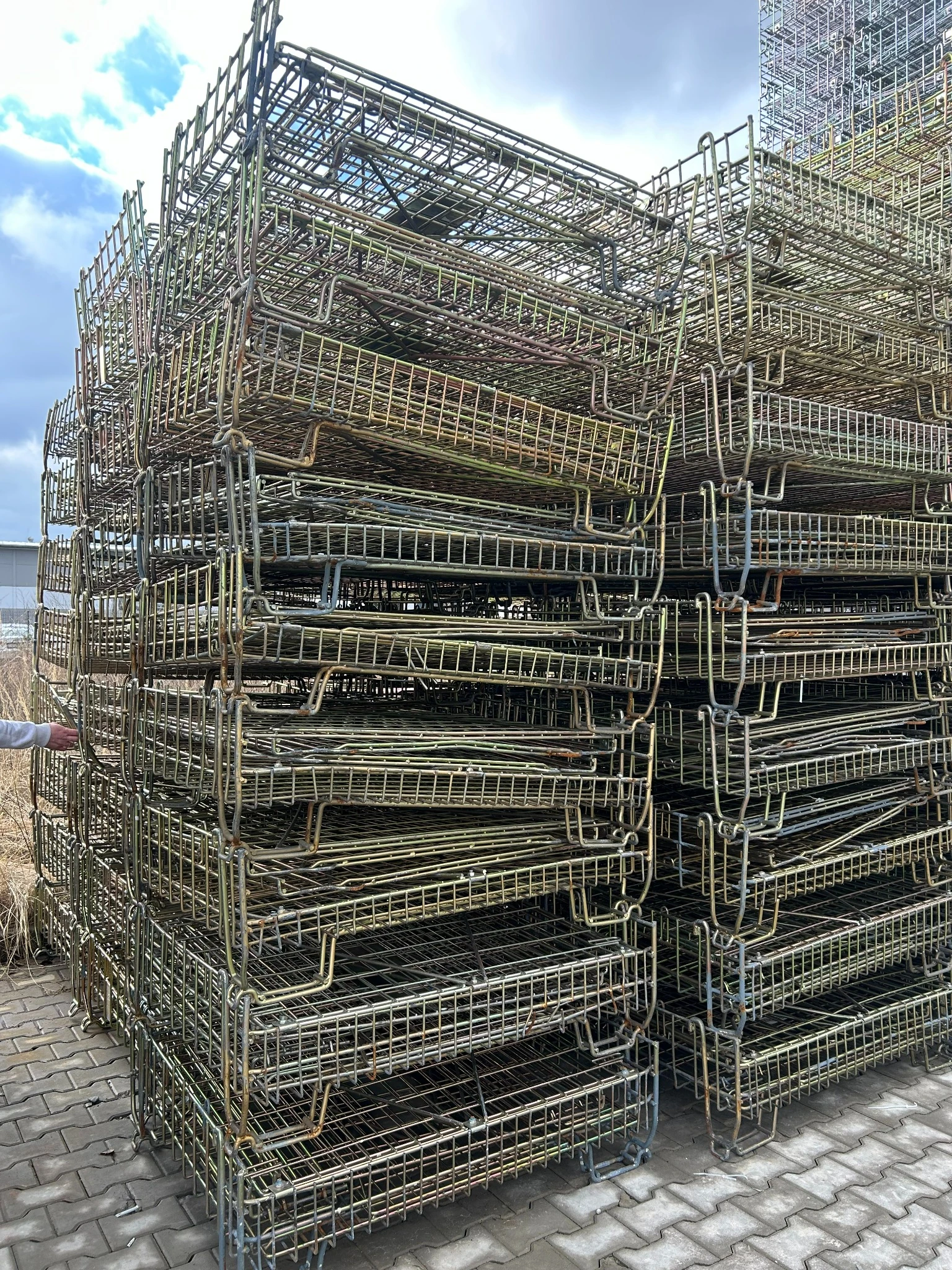
Sustainable Development: First Extend the Carrier’s Life, Then Buy New
Sustainable development in logistics doesn’t have to start with grand declarations. It often begins with a very practical question:
Do we really need to buy new carriers, or can we safely return the ones we already have to service?
This approach aligns with the idea of a circular economy. The European Commission indicates that the Circular Economy Action Plan covers the entire life cycle of products and assumes, among other things, waste prevention and keeping resources in the economy for as long as possible.
The European Parliament defines the circular economy as a production and consumption model that includes, among other things, reusing, repairing, refurbishing, and recycling existing materials and products for as long as possible.
For metal logistics carriers, this logic is very concrete. Instead of treating a damaged container or roll container as a problem to be replaced by a new purchase, one can assess whether its life cycle can be extended.
For a company, this means not only environmental benefits but also operational ones:
- less waste,
- fewer unnecessary purchases,
- better utilization of existing resources,
- greater control over the fleet,
- less pressure on storing decommissioned carriers,
- consistency with ESG policy and responsible procurement.
This is sustainable development in practice — not as a slogan, but as an operational decision.
Refurbishment and ESG – How to Demonstrate Value Within the Organization?
For the logistics department, refurbishment is a way to maintain operational continuity. For the finance department, it can be a way to reduce unnecessary expenses. For the purchasing department – a rational use of already owned resources. For ESG – proof that the company does not automatically replace everything with new, but extends the life of equipment where it is safe and justified.
Therefore, refurbishment effectively combines several perspectives:
Logistics
Carriers return to service, and the warehouse does not have to operate with shortages and emergency solutions.
Purchasing
The company can reduce purchasing pressure and better plan fleet replacement.
Finance
The decision is not based solely on the price of a new carrier, but on the total cost of fleet ownership.
Health and Safety
Repaired and inspected carriers are safer than a damaged fleet left in circulation.
ESG
Refurbishment extends the product life cycle and reduces metal waste. Elkom Trade highlights supporting environmental goals as one of the arguments for mesh container refurbishment.
How to Organize a Carrier Fleet Maintenance Program?
Refurbishment yields the best results when it is not a one-off action, but part of an organized process.
In practice, it is worth implementing a few simple rules.
- Regular fleet condition assessment
Don’t wait until carriers start failing en masse. It is worth periodically checking the condition of containers, roll containers, pallet collars, and metal pallets.
- Separating damaged carriers from functional ones
Damaged units should go to a designated area, not accidentally return to service. This reduces risk and improves fleet control.
- Photographic documentation
Photos of damage facilitate initial assessment, qualification, and discussion with the refurbishment provider. Elkom Trade allows the process to begin by submitting information about the carrier type, quantity, nature of damage, and photographic documentation.
- Qualification: repair, refurbish, or replace?
Not every carrier is worth refurbishing. Some can be repaired, some require more extensive refurbishment, and some should be withdrawn. A reliable technical assessment is key.
- Post-service inspection
Refurbishment should conclude with a check of functionality and safety. Elkom Trade states that service documentation, including a post-refurbishment protocol, is standard.
- Spare parts plan
For large fleets, it is important to identify components that experience the most wear and plan for their availability. This is particularly relevant for wheels in roll containers, locking mechanisms, shelves, hinges, and other components subjected to intensive use.
Refurbishment as an Element of Operational Advantage
In well-managed logistics, it’s not just about how many carriers a company owns, but how many of them are actually in operation.
A fleet that looks good on paper but is partially damaged and sitting idle does not secure operations. Therefore, refurbishment can be a way to recover resources that the company already has but is not fully utilizing.
This is particularly important for companies that:
- experience seasonal volume increases,
- operate with a large number of carriers,
- serve multiple locations,
- rotate containers between facilities,
- have problems with damage in circulation,
- want to reduce purchases of new units,
- need to demonstrate ESG compliance,
- want to standardize carriers within the organization.
In this view, refurbishment is not an additional cost. It is a tool for maintaining operational efficiency.
Submit Form
FAQ
No. Other logistics carriers can also be refurbished, including gitterboxes, roll containers, metal pallets, pallet collars, and other structures used in intralogistics – provided their technical condition allows for the restoration of their operational parameters.
Yes. Elkom Trade states that it also refurbishes carriers not manufactured by the company. The type of carrier, its technical condition, and the cost-effectiveness of refurbishment are decisive factors.
Yes. Documentation confirming the scope of refurbishment performed, including a post-refurbishment protocol, is standard.
Refurbishment extends the life cycle of carriers, reduces waste, and lessens the need for automatically buying new units. It aligns with the circular economy approach, where products and materials should be used for as long as possible.
Turnaround time depends on the volume and scope of work (e.g., scale of repairs, scope of replacements, required surface protection). The deadline is established at the order acceptance stage. However, it can be assumed that the maximum time is 2 weeks from the moment of delivery to Elkom Trade’s facility in Ostrowiec Świętokrzyski.
In such cases, a recommendation is presented: refurbishment of selected units, refurbishment with replacement of larger modules, or another cost- and operationally optimal solution. A similar approach can be applied to warehouse rack refurbishment, if their technical condition permits.